

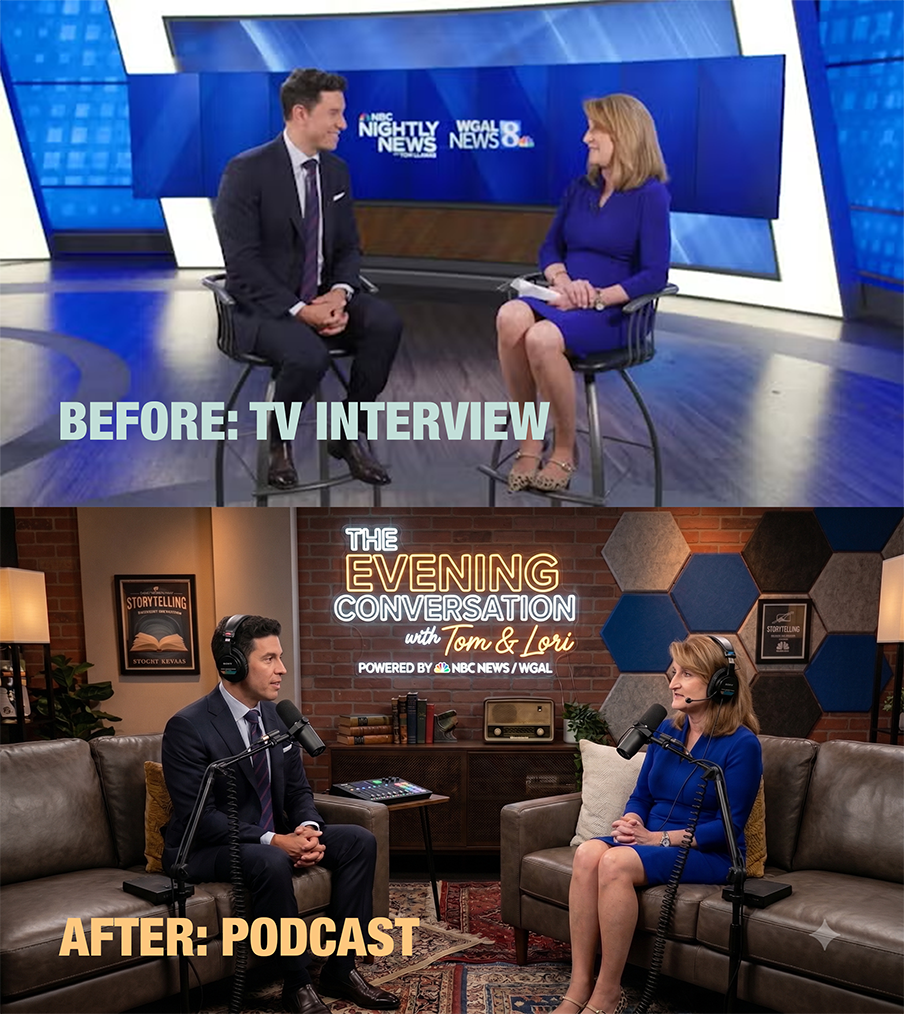
Here in 2026, when you ask people “What is a podcast?” the first thought for many is about the aesthetic. It’s a podcast if it looks like a podcast.
I recently wrote about a new platform where ‘Start a Podcast’ means schedule a two-person video conversation where others can watch and comment.

And now, here I am again with a related question. I can’t let it go.
There’s a creator now doing a series of reels asking folks to respond to the question ‘What is a podcast?’ and it just reminded me so much of what I’ve been seeing lately, particularly among traditional media.
They take everything they have always done with, say, a TV interview, throw same the people on a couch, shove a microphone on a boom stand in their face, give them a set of headphones, and whammo! Now it’s a podcast.
It’s legacy media in podcast drag.
I watched a news segment recently where they had a guest, no visible microphone etc. Then I saw the same guest, same backdrop, same room, same everything except now he has headphones on, because now he’s on the podcast.
Make sure they notice the headphones — they’re the podcast version of the eyepatch that tells you “pirate.”
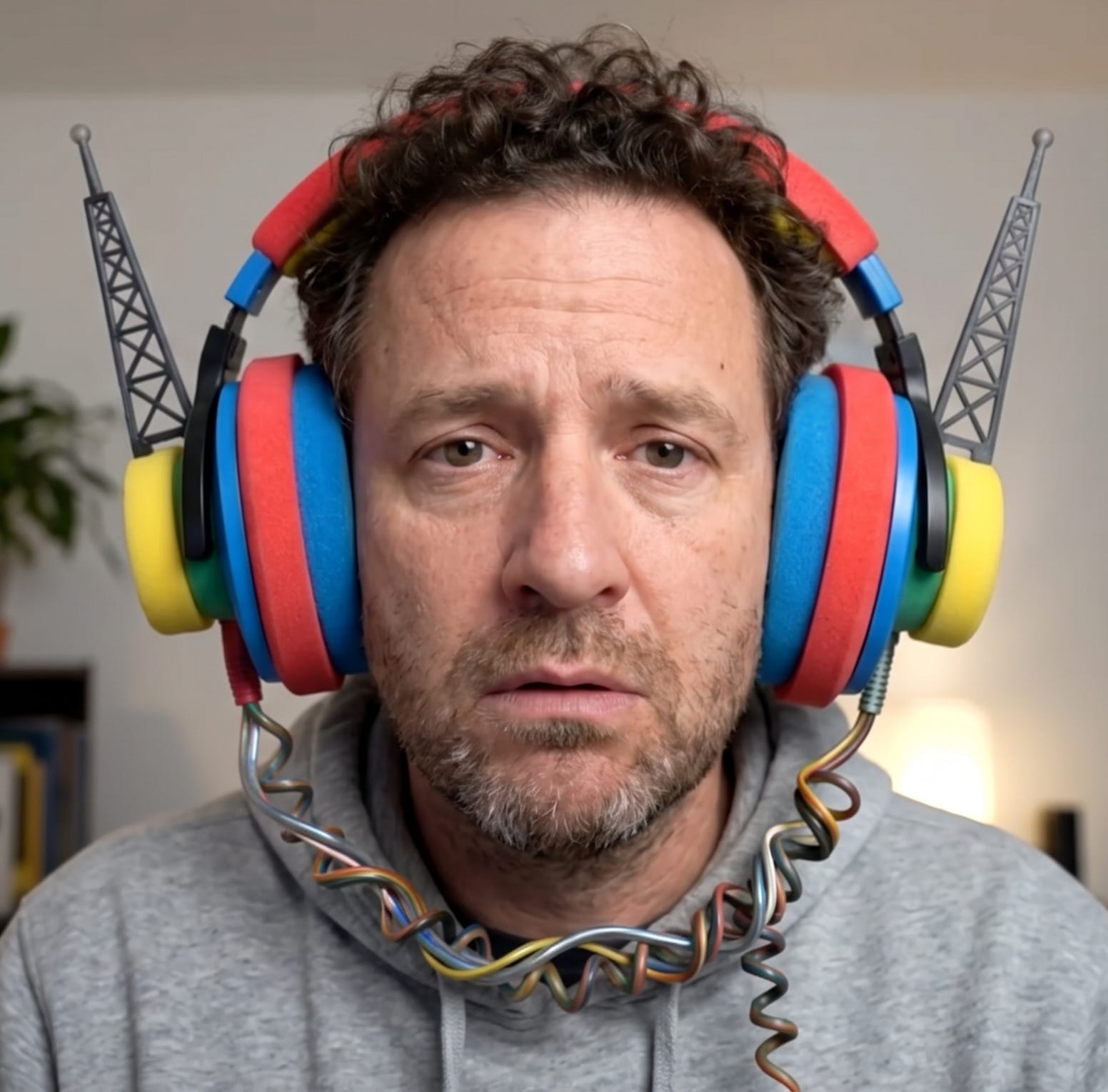
This podcast cosplay is out of control.
I even saw a TV commercial recently framed as a fake podcast.
I think what I find particularly annoying about it isn’t just that it’s ridiculous–it’s a form of theft. It’s specifically borrowing a reputation that podcasting spent about two decades earning the hard way.
Podcasting’s credibility wasn’t handed to it. It was built by default, almost accidentally, out of constraint.
No gatekeepers, no format police. Indie podcasters don’t have network execs trimming things to fit a slot. Limited budgets and limited time might mean unscripted-ness — messy tangents, long silences, real disagreement.
Low production value read as honesty. A show recorded in a closet with a modest mic couldn’t fake slickness, so the roughness itself became a trust signal. You were hearing something, not watching a performance of something.
Time investment as a filter. Two hours of audio is a big ask. People who put in the work to make something worth two hours tended to actually have something to say. The format selected for depth just by being inconvenient.
Parasocial intimacy earned through repetition. Weekly, in your ears, for years — that’s a different relationship than a single TV hit. Trust accrued slowly, episode by episode.
None of that transfers by copying the look. That’s the con.
And it’s a clever con, in a bleak way. It’s not stealing the credibility by claiming “trust us.” It’s stealing it by triggering the visual shorthand your brain already built for trustworthy-long-form-unscripted-conversation. Couch+boom mic+headphones equals “ah, this is the genre where people talk honestly for a long time,” before a single word gets spoken. It’s credibility by association, laundered through set dressing. Advertisers chase this too. “Podcast-style” ad reads outperform traditional spots partly because listeners have been trained that this format means a real person telling me their real opinion, not a script. Podcast cosplay borrows that exact trained response.
Real podcast credibility was earned through inconvenience — time, repetition, low production value, no gatekeeper. Cosplay tries to buy that same credibility through convenience — one shoot, minimal risk, full script, full edit control. The moment you notice something bringing all the control of traditional media into the costume of a medium defined by giving up control, you’ve spotted the cosplay.
Here’s who actually pays for it: indie creators.
They spent years doing the unglamorous, unpaid work that made “podcast” mean something — recording alone in a basement, building an audience one word-of-mouth listener at a time, staying consistent for 200 episodes before anyone noticed. That labor is exactly what podcast cosplay skims off the top. A network doesn’t have to do any of it. They just buy the props. It’s the content equivalent of a chain restaurant putting up reclaimed-wood siding to borrow the credibility of the actual farm-to-table place three blocks away that’s been grinding for a decade. The indie did the work. The costume-wearer gets the association for free.
And this doesn’t stay a victimless appropriation. Once “podcast” becomes a look anyone can buy — studio, couch, boom mic, a name-brand host — audiences and advertisers start pattern-matching on production value instead of substance. That quietly punishes indie creators for the very thing that made them credible in the first place. The low-budget, one-person-and-a-mic setup that used to read as authentic now risks reading as cheap, sitting next to a glossy network version wearing the same costume. The market can end up rewarding the cosplay over the source material, simply because the cosplay has better lighting.
There’s a discovery problem baked in here too. On platforms and charts, an indie’s 45-minute solo show and a network’s produced “podcast” segment get bucketed into the same category. Indies aren’t just being imitated — they’re being crowded out in the same feed by things wearing their clothes but backed by marketing budgets and existing audiences.
Here’s the hopeful part, though, and maybe the thing worth saying loudest: everything about the costume is copyable. The mic, the couch, the lighting — anyone with a budget can buy all of it by next Tuesday. What isn’t copyable is the trust that only comes from doing it the inconvenient way — years of consistency, actual creative control, the willingness to be unscripted because there’s no PR team in the room. That’s the indie’s real moat, and it’s worth saying out loud instead of assuming people will just notice.
So don’t compete on the ground cosplay is contesting. Don’t try to out-light them, out-guest them, out-polish them — that’s a game the networks win on budget alone, every time. Compete on the thing that actually made this medium mean something: depth, unscripted risk, and direct trust with an audience you actually built.
They copied the costume. They can’t fake having nothing to lose.